

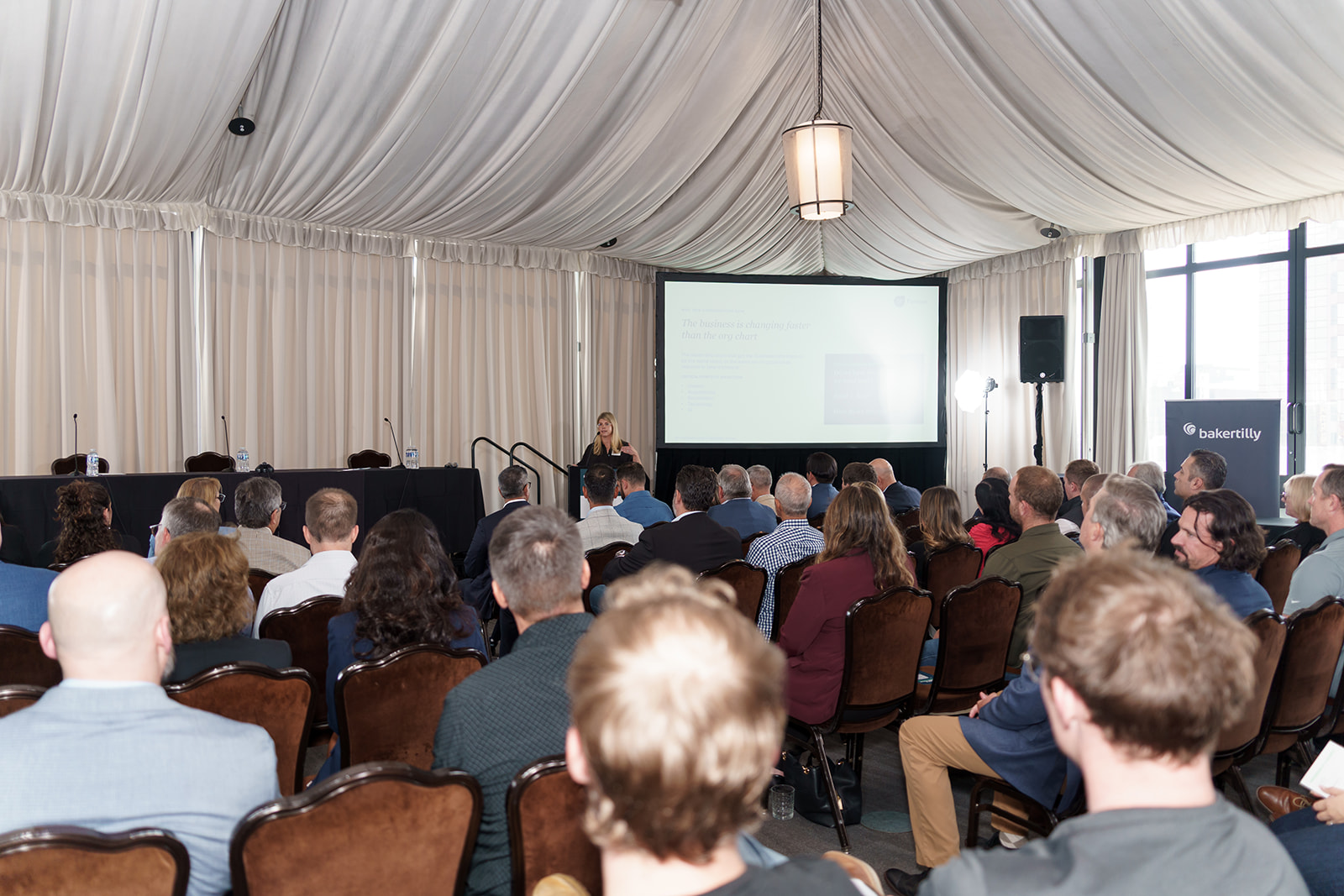
On September 24, more than 120 senior leaders joined 3P Partners in Sacramento to discuss executive hiring, succession, and building the capabilities required for growth.
Speakers
Click names below to learn more.
- Sammy Duda, CEO, A. Duda & Sons
- Leandro Ravetti, CEO, Cobram Estate USA
- Lisa Smoot, CEO & President, SF Bay Coffee
- Corey McLellan, CFO, Bertolino Foods
- Amber Hood, SVP of Operations and Supply Chain, Martinelli’s
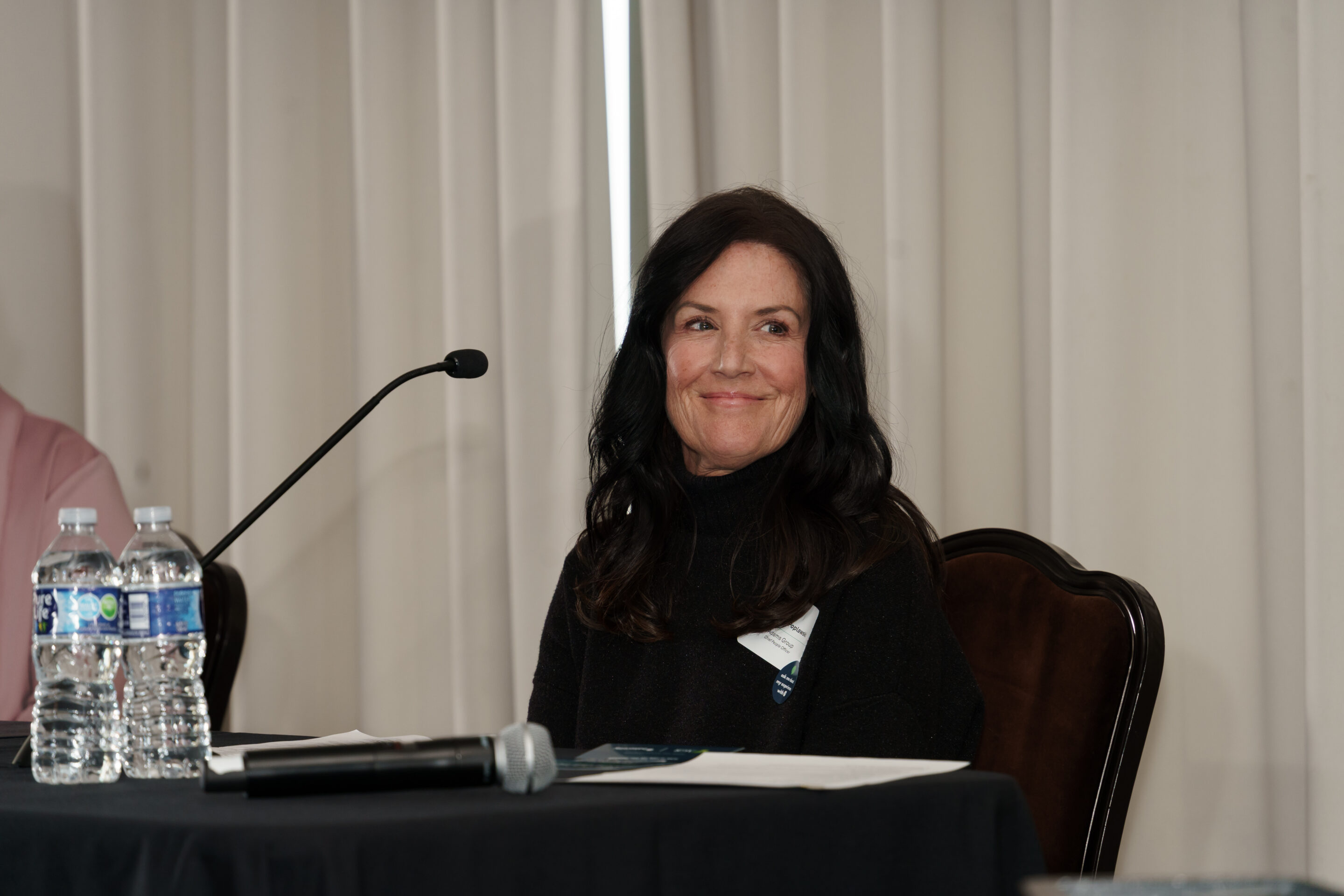
- Michele Poplawski, Chief People Officer, Adams Group
Thank you to our sponsors, AGR Partners and Baker Tilly, for making this event possible.
Opening Remarks: Building Leadership Teams for What’s Next
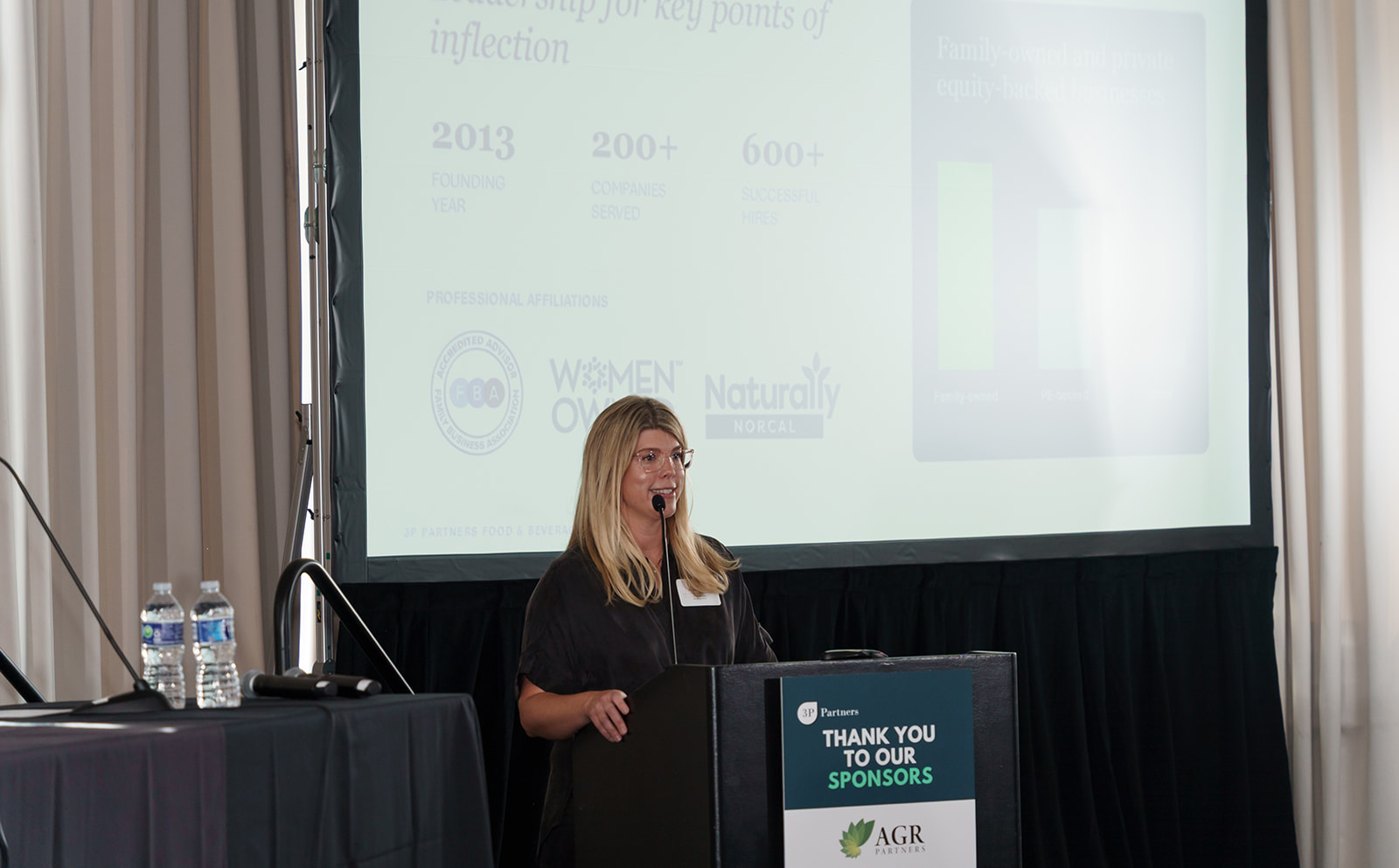
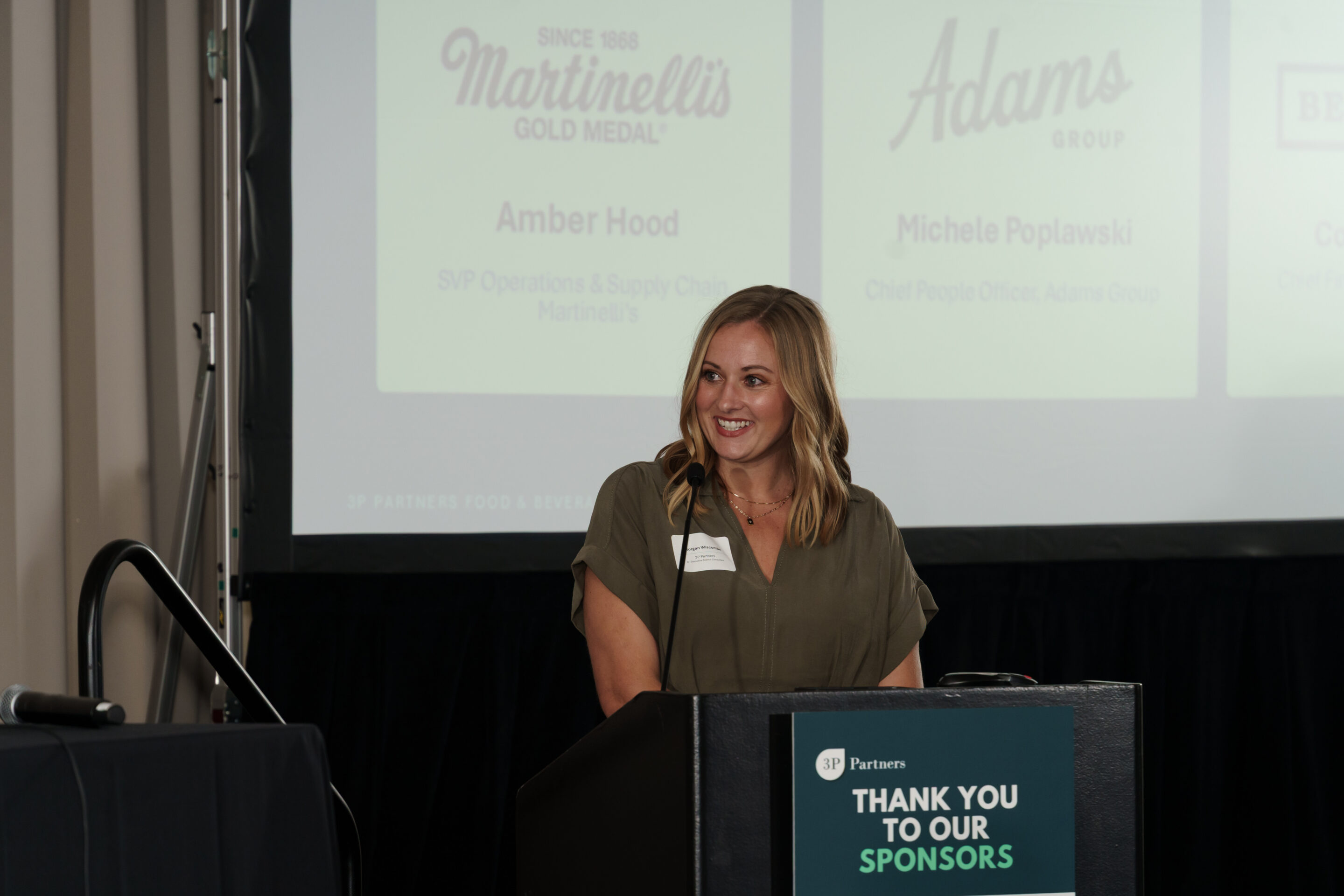
Rachel Quinn, Managing Partner at 3P Partners, framed the discussion around one question: Is your leadership team built for where the business is going?
Drawing on 3P’s work with more than 200 food, beverage, and agribusiness companies, she focused on the decisions family-owned and private equity-backed businesses face during succession, acquisitions, digital transformation, and growth.
Before starting a search, she encouraged everyone involved in the hiring decision to agree on the three or four things the new leader needs to deliver to the business in their first 12 to 24 months. Without that clarity, companies risk recreating the previous role rather than addressing future needs. A candidate’s prior title is only one data point. More important is whether they have solved comparable problems in a similarly complex business.
That discipline applies to internal promotions as much as external hires. Developing existing talent and recruiting outside leadership are not mutually exclusive. The goal is to identify where the current team needs support, then bring in complementary capability to handle greater complexity without losing the knowledge, relationships, and values that made the business successful.
Rachel identified two primary root causes of hiring mistakes: mistaking interview polish for capability and hiring against the wrong business need. Practical case studies help address the first by showing how candidates approach real business problems with limited information. The assessment is not about a polished presentation or arriving at one correct answer. It reveals the questions candidates ask, the assumptions they challenge, how they prioritize, and how they reach a recommendation. This gives hiring teams evidence of critical thinking and judgment, allowing them to assess potential beyond the resume.
The CEO Perspective: Build the Capabilities Required to Support Future Growth

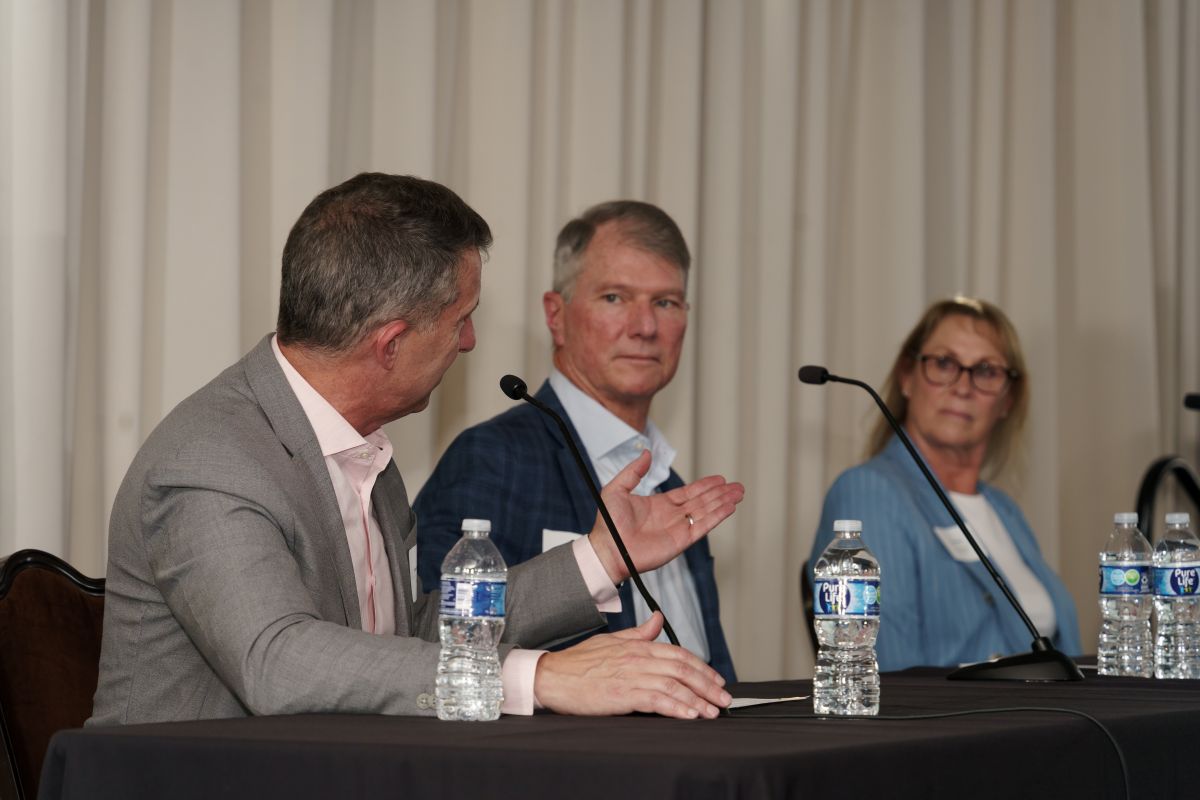
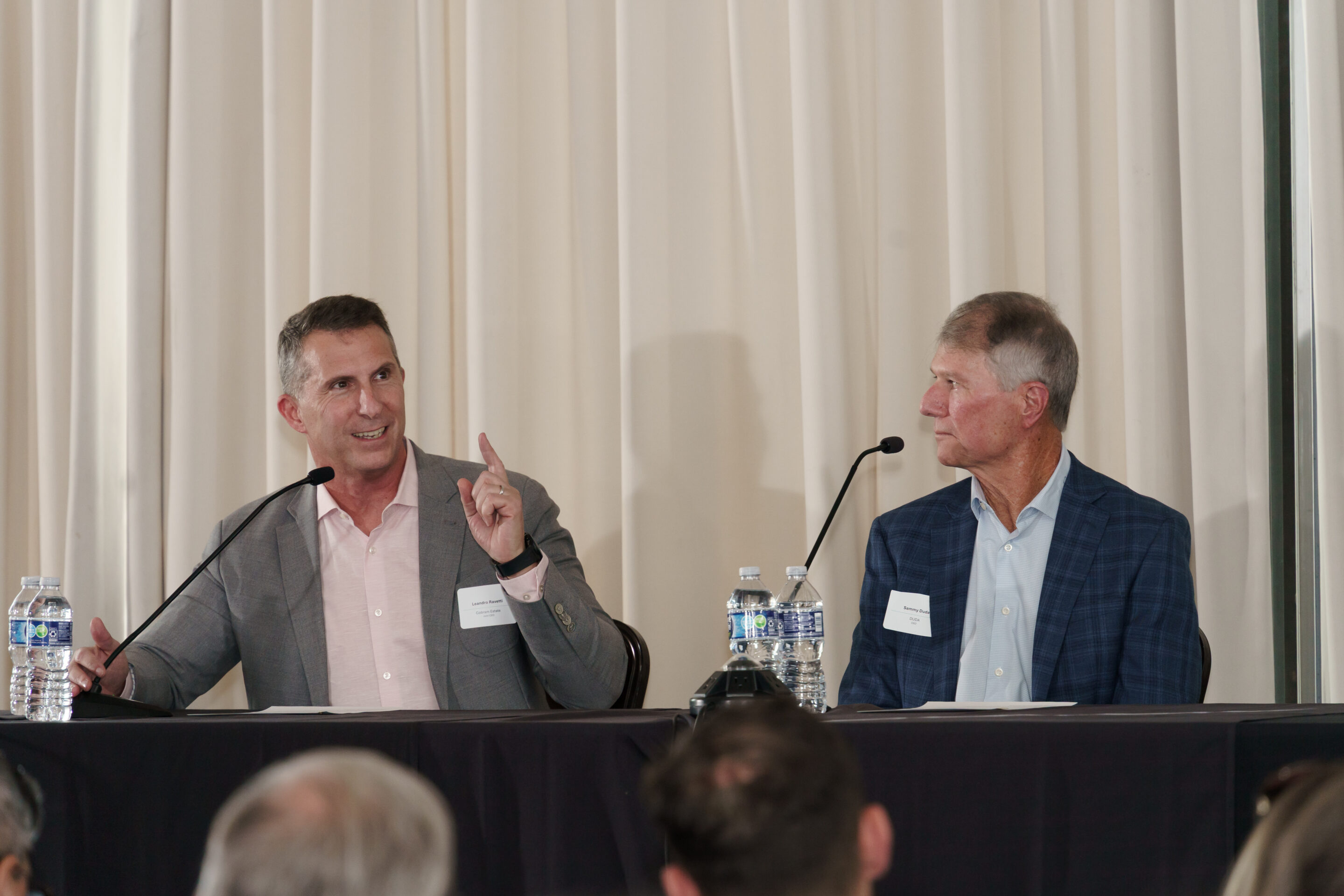
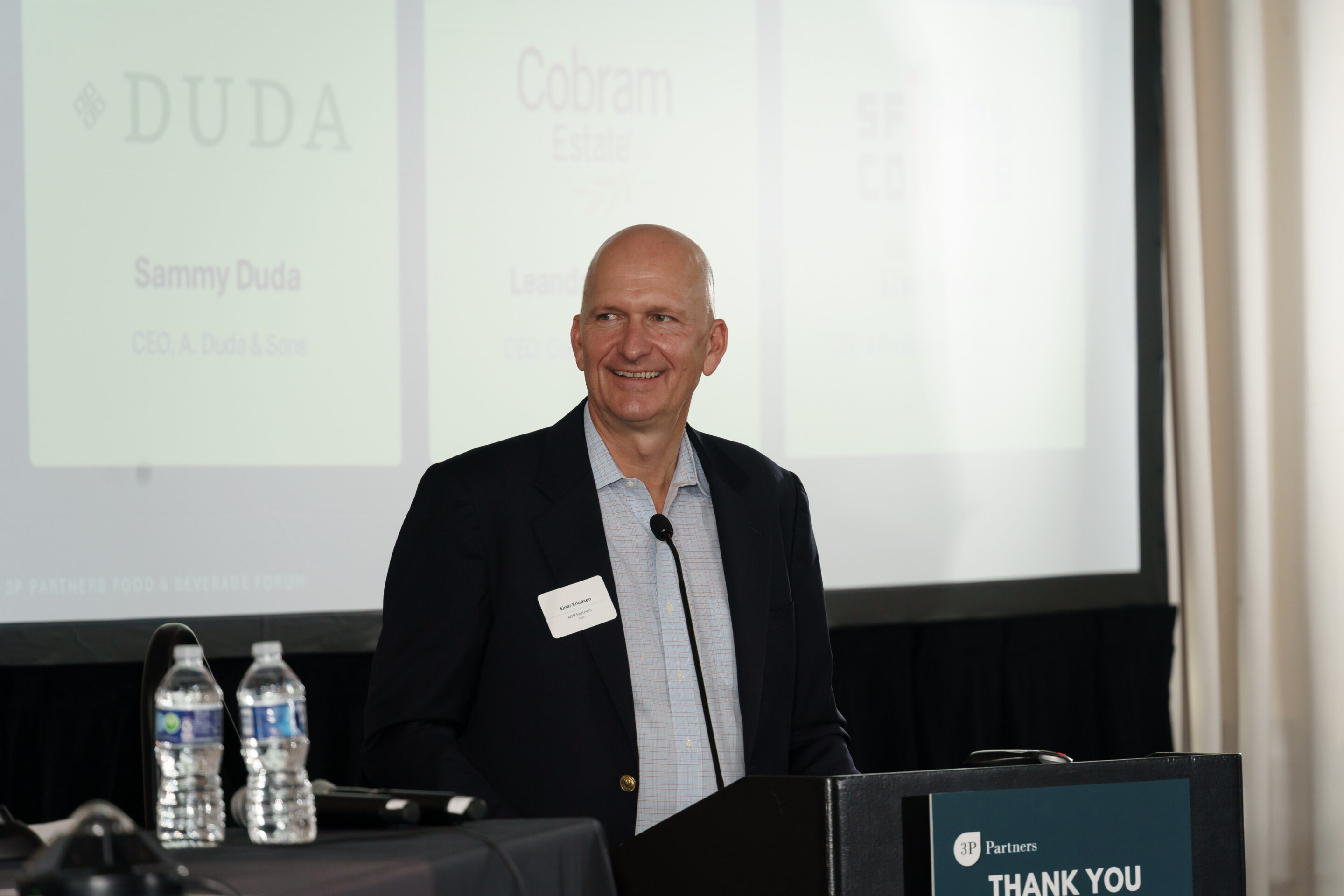
From left: Leandro Ravetti, Sammy Duda, Lisa Smoot, and Ejnar Knudsen.
Sammy Duda, CEO of A. Duda & Sons, brought the perspective of a fourth-generation leader of a business celebrating 100 years in operations. To support its growth strategy, DUDA recruited dedicated expertise rather than adding responsibilities to already busy executives. His distinction was important: bringing in outside capability is not a rejection of the existing team. It recognizes that a new strategy may require experience the business does not yet have.
Leandro Ravetti, CEO of Cobram Estate USA, discussed assessing leadership capability while combining Cobram’s US business with California Olive Ranch. The question was not simply who could fill today’s positions, but who could support the next stage of growth for the combined businesses. His succession advice was equally practical: when a CEO transition is anticipated in the next 3 to 5 years, consider building the bench now through a CFO, COO, or commercial leader with the potential to step up. That creates time to assess performance and judgment inside the business before the top role becomes vacant.
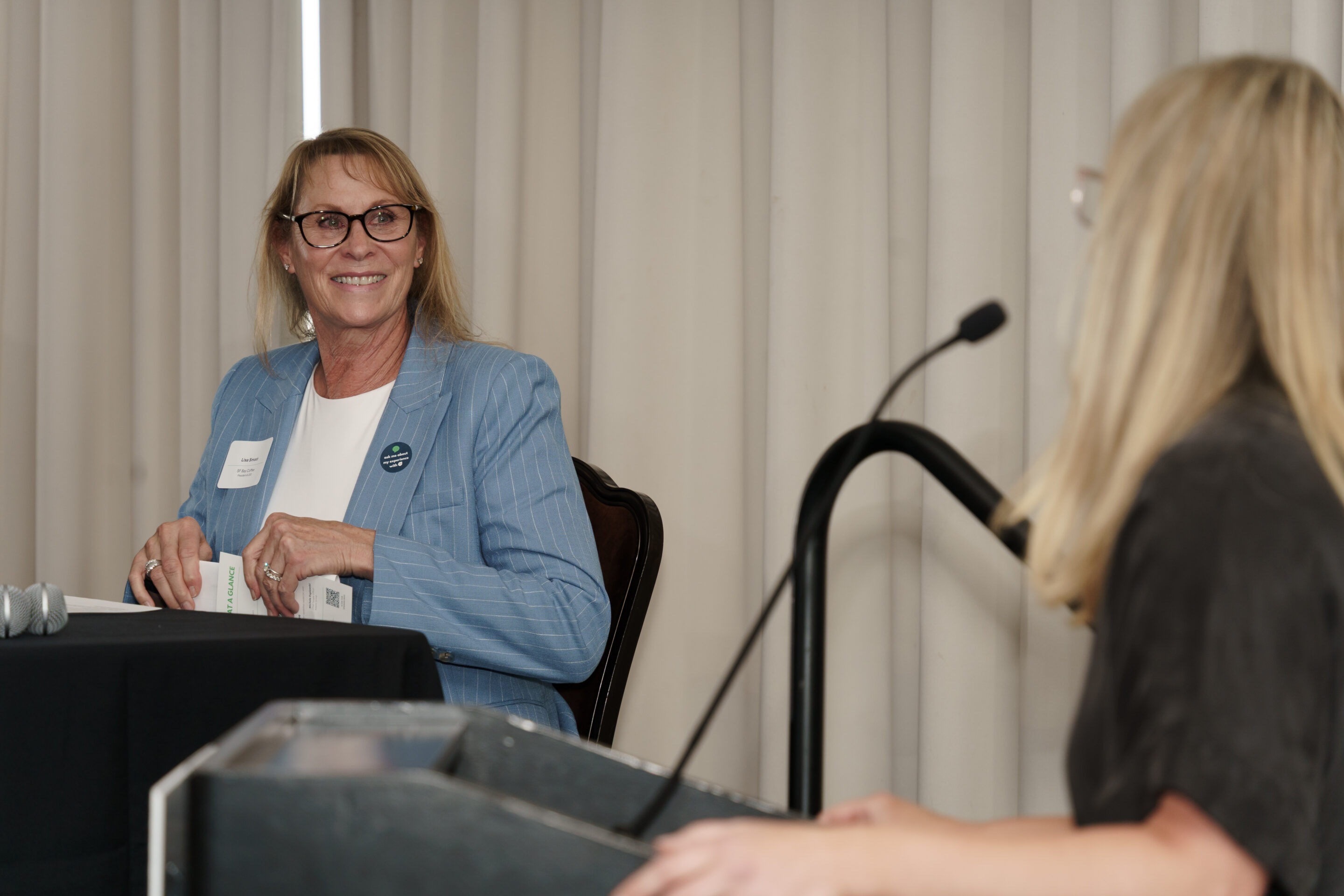
Lisa Smoot, CEO and President of SF Bay Coffee, offered a commercial example from the family-owned coffee roaster with a nationally distributed consumer brand. Her VP of Sales, recruited through 3P Partners, introduced CPG experience, stronger processes, data analysis, and team development that became part of everyday operations. The contribution extended beyond one executive’s performance; it strengthened how the wider team worked. Lisa also highlighted curiosity as a trait she looks for when developing frontline employees into leaders.
AI: What’s Working and How to Measure the Business Impact
The AI discussion was more specific than a general call to adopt new technology.
The speakers agreed that the potential is significant, particularly in financial analysis, operations, sales, and other data-intensive areas. However, businesses need to take a deliberate approach. Effective use of AI requires appropriate guardrails, strong data practices, and clarity around the specific problems the technology is intended to solve.
Lisa Smoot shared that SF Bay Coffee is already using AI to support sales and market analysis, as well as administrative workflows such as reviewing and prioritizing purchase orders. The company is now exploring where similar tools can help other functions reduce repetitive work and free up time for more valuable activity. The opportunity was to apply people’s knowledge of the business to tasks they already understood, rather than treat AI as a separate IT initiative.
Leandro Ravetti described three systems running in parallel following the California Olive Ranch acquisition. Bringing them together, alongside appropriate controls over access to company information, was part of preparing the business to use AI more effectively in financial analysis. His example highlighted a leadership challenge beyond choosing software, i.e., coordinating finance, operations, and technology around how the combined business should work.
Sammy Duda reported quicker information gathering and consolidation. The executive team also held a four-hour session on AI policy and direction after recognizing that employees were already using tools without sufficient visibility into how they were being used. Adoption, oversight, and measuring value were progressing together.
The Functional Perspective: Test Judgment and Make Talent Decisions More Concrete

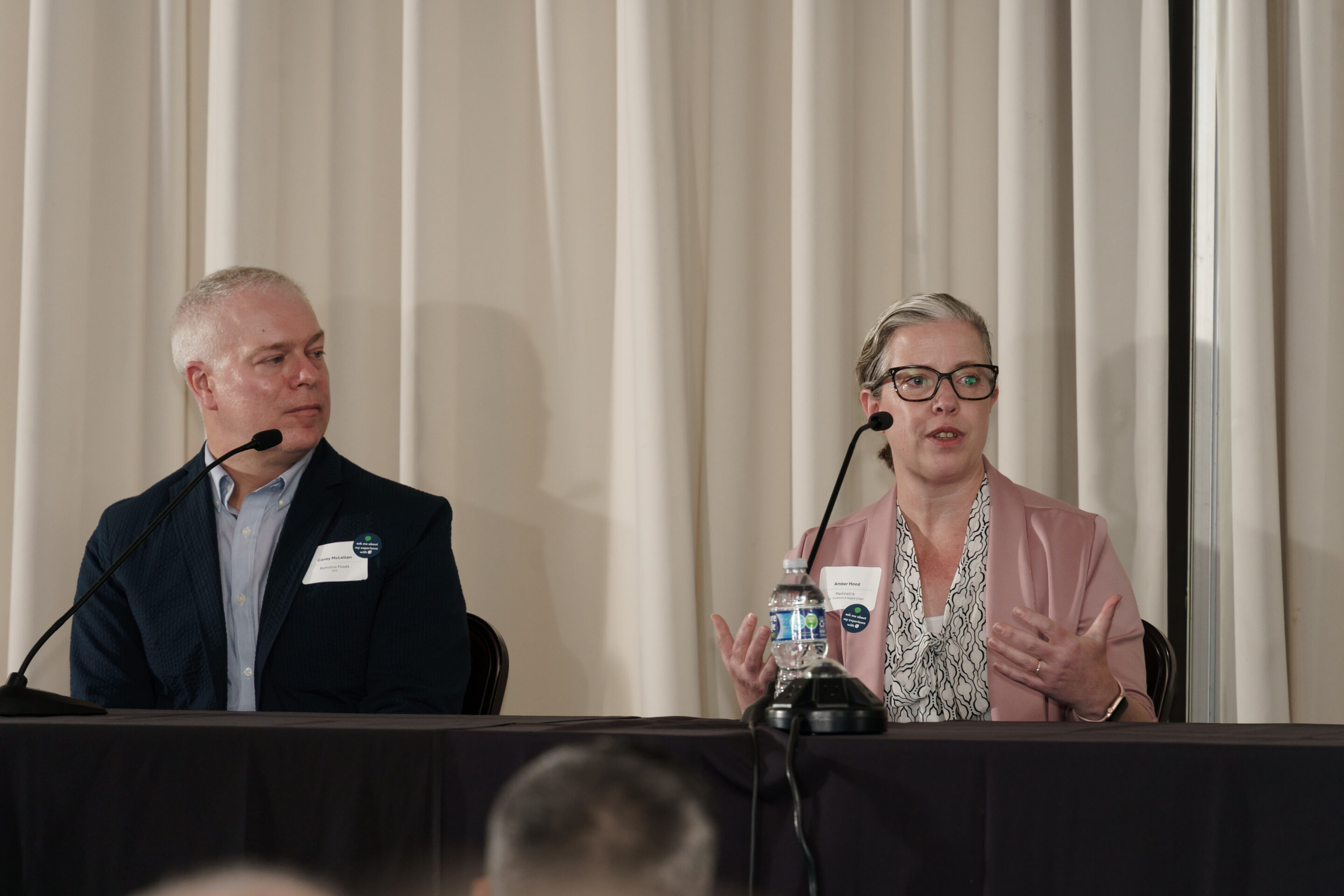
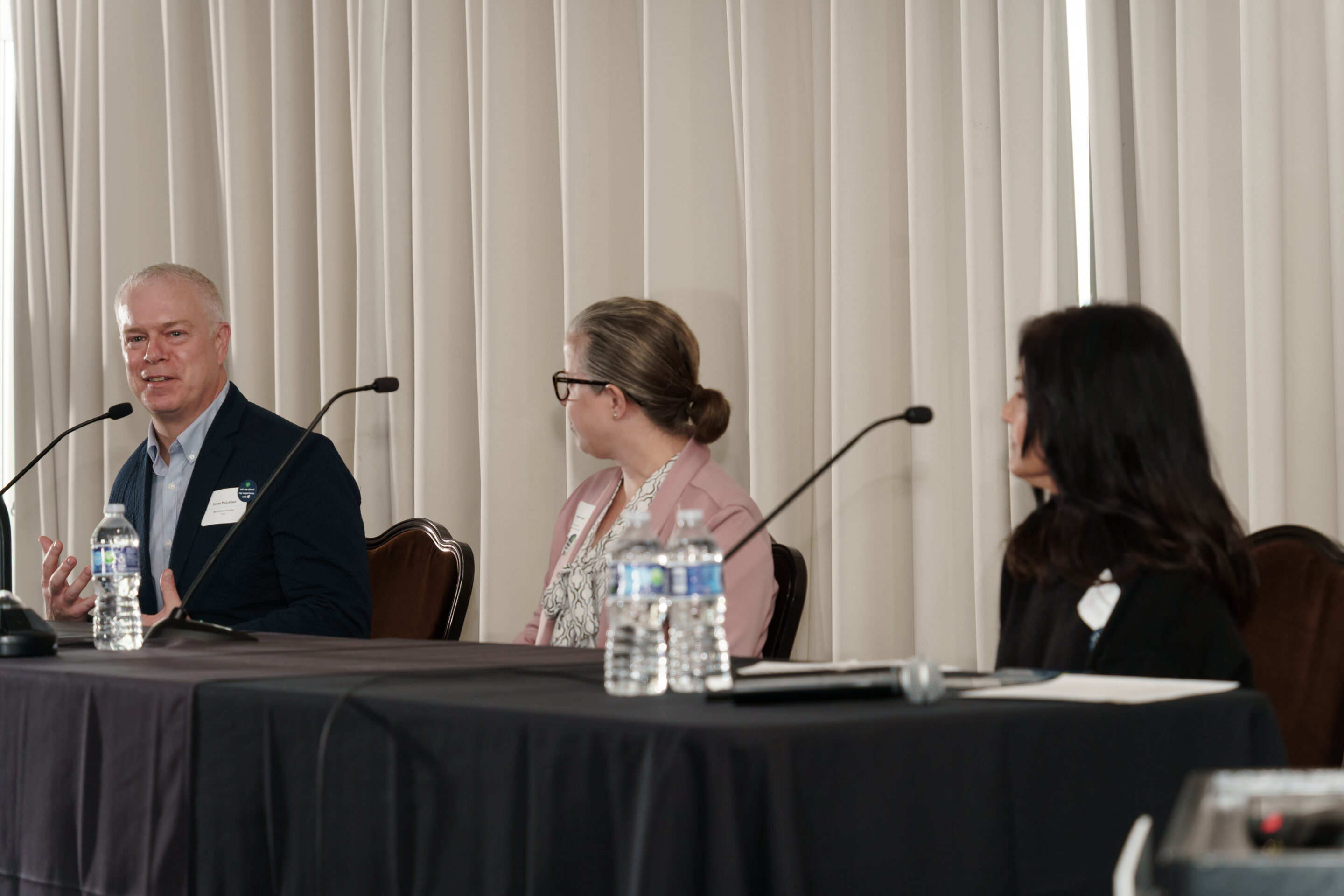
From left: Corey McLellan, Amber Hood, Michele Poplawski, and Morgan Wiscombe.
Amber Hood, SVP of Operations and Supply Chain at Martinelli’s, was recruited through 3P Partners to lead plant modernization and network optimization at the historic, family-owned juice and cider producer. Her case study example illustrated the difference between completing an assignment and exercising judgment. For example, a strong candidate may identify the top three challenges that deserve attention first, challenge assumptions, and narrow the problem. She described changing her assessment of candidates who could not get beyond their prepared response when questioned further. The distinction is between someone who has rehearsed a solution and someone who can think through an unfamiliar problem.
Michele Poplawski, Chief People Officer at Adams Group, discussed attracting and developing talent at a fifth-generation family business expanding into new markets. During the transition from fourth- to fifth-generation leadership, 3P helped recruit key functional leaders to support a new corporate structure while preserving the company’s culture. Michele cautioned against candidates who present a complete plan without asking questions because they assume that what worked at their previous company will work in this one. She noted that this mindset has changed hiring decisions. She also reported an offer acceptance rate above 95%, which she linked to candidates seeing the impact they can make in a lean, growing business.
Corey McLellan, CFO of Bertolino Foods, leads finance, accounting, and IT at a second-generation family-owned meat manufacturer with third-generation family members working in the business. Having joined from outside the meat industry, he described learning the products, visiting customers, and asking colleagues with decades of experience. His own transition illustrated why relevant functional expertise and a willingness to learn can matter more than an exact industry match. He described using an accountability chart to define the responsibilities the business will need in the future before assigning titles or names. Internal promotion remains a preference, but it comes with a commitment to training and mentoring. External hiring becomes appropriate when the business needs experience it cannot yet develop internally.
Thank you to our speakers, moderators, and sponsors, AGR Partners and Baker Tilly, for supporting the Forum.

Is your leadership team built for where your business is going?
3P Partners works with family-owned and private equity-backed food, beverage, and agribusiness companies navigating succession, acquisitions, and growth. Our searches start with the business problem, the capability missing from the team, and the outcomes the next leader must deliver.
Planning an executive hire or leadership transition? Contact 3P Partners with the role or capability gap and the business challenge. We’ll discuss the critical deliverables for the next 12 to 24 months and how to assess candidates against those requirements. Discuss your next leadership hire with 3P Partners.
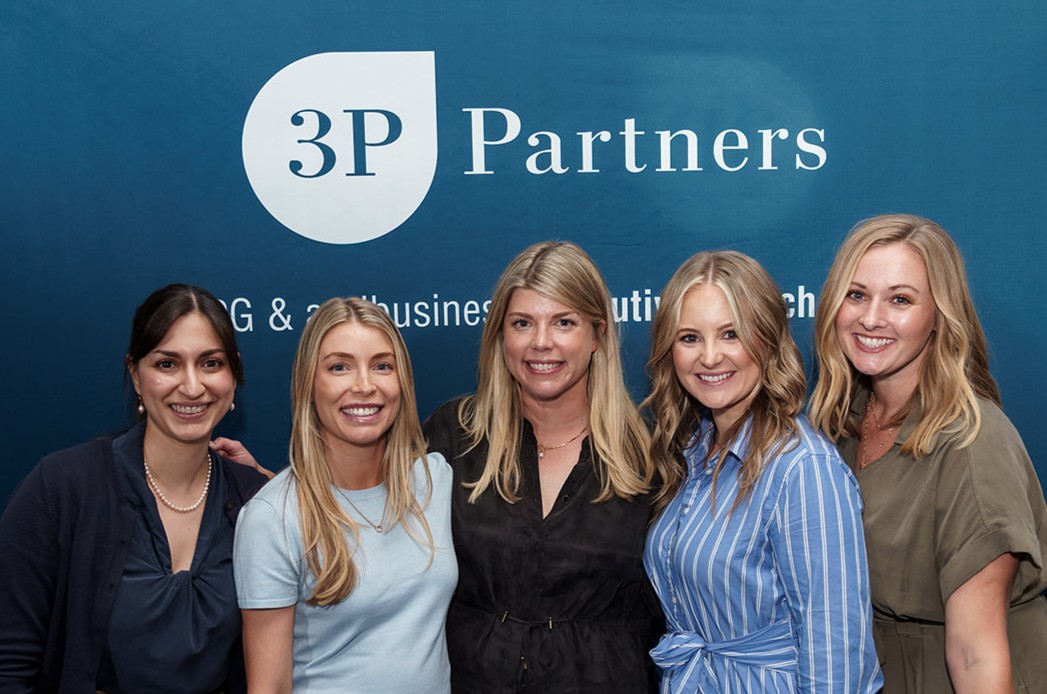
Forum Gallery
MEET OUR SPEAKERS

Sammy Duda
Chief Executive Officer, A. Duda & Sons
Sammy Duda is a fourth-generation member of A. Duda & Sons, the Florida-based agricultural and real estate company founded by his great-grandfather in 1926. The company has grown from a 40-acre celery farm in Oviedo to a diversified agricultural and real estate company with operations across the United States.
A baseball player in college, Duda attended Mississippi State University, where he played alongside future MLB stars and competed in the 1985 College World Series. After joining the family business, he completed a yearlong rotation through multiple departments before selecting a career in the Agricultural Division. He was selected as CEO in 2022.
His career began in McAllen, Texas, followed by several years in Yuma, Arizona, before relocating to Salinas, California in 1996. He moved back to Florida from Salinas in 2022.
Married to his wife Amy for 39 years, Duda has three children who live in Seattle, WA, Brooklyn, NY and Thousand Oaks, CA and one grandchild. He continues to play baseball in an over-45 league in Orlando and enjoys golf and fishing in his spare time.

Leandro Ravetti
Chief Executive Officer, Cobram Estate USA
Leandro graduated as an Agricultural Engineer in Argentina, where he began his career in olive research and had the opportunity to advise some of the country’s largest olive developments. In 2001, he moved to Australia, bringing with him a strong passion for olive growing, innovation, and quality. Since joining Cobram Estate Olives, Leandro has been fortunate to contribute to the company’s growth over many years, serving as Executive Director since 2005 and, more recently, as Joint CEO following the company’s public listing in 2021. He was also honored to receive a Meritorious Lifetime Award from the Australian Olive Association in recognition of his contribution to the Australian olive industry.
More recently, Leandro moved to California to support the acquisition and integration of California Olive Ranch into Cobram Estate Olives, helping bring together teams, experience, and best practices across both hemispheres.

Lisa Smoot
Chief Executive Officer & President, SF Bay Coffee
Lisa is a second-generation CEO running a large vertically integrated coffee roasting business with operations in the U.S. and Central America. Lisa oversees all aspects of SF Bay Coffee’s business from strategic planning and growth to coffee farming worldwide, operational efficiencies and product sales. Lisa has worked for the family business for 43 years. She is a graduate of the University of California, Berkeley.

Amber Hood
SVP, Operations & Supply Chain, Martinelli’s
Amber Hood leads Supply Chain & Production Operations at S. Martinelli & Company, bringing more than 20 years of leadership experience across the food and beverage and manufacturing industries. Throughout her career, she has focused on building strong teams, strengthening operations, and creating supply chains that can navigate complexity while delivering for the business.
Prior to joining Martinelli’s, Amber held senior leadership roles at Keurig Dr Pepper, where she led end-to-end planning, network strategy, and supply chain transformation initiatives across North America.
Amber holds a Master of Engineering from Cornell University and a Bachelor of Science in Industrial Engineering from Texas A&M University and is a certified Lean Six Sigma Black Belt.
Outside of work, Amber and her husband of 24 years—her high school sweetheart—enjoy traveling and spending time with their two college-aged daughters.

Michele Poplawski
Chief People Officer, Adams Group
Michele Poplawski is Chief People Officer at Adams Group, a fifth-generation, family-owned specialty grains, oils, and food ingredients company based in Sacramento. She leads the company’s people strategy, including organizational design, talent management, leadership development, and workforce planning across a team spanning 12 states.
Michele brings more than 25 years of HR leadership experience across the food and beverage, technology, and consulting industries. She spent nearly a decade at Blue Diamond Growers, progressing from Senior HR Business Partner to Vice President of Human Resources and Communications. In that role, she helped build and evolve the company’s people function to support more than 1,500 employees across domestic and international locations.
Earlier in her career, Michele held HR leadership roles at SynapSense and Intel Corporation and later led her own HR consulting practice, advising organizations on organizational design, talent strategy, compensation, and leadership effectiveness.
She holds a Bachelor of Arts in Psychology from California State University, Sacramento, as well as a USC Marshall executive certificate in Organizational Design.
Born and raised in Sacramento, Michele is a proud mom of two. Her daughter lives in San Diego, and her son is a junior at Sacramento State studying Electrical Engineering. Michele lives with her husband, Chad, and their very loved—and very spoiled—English Cream Golden Retriever, Charlie.

Corey McLellan
Chief Financial Officer, Bertolino Foods
Corey McLellan leads the Finance, Accounting and IT functions at Bertolino Foods, a family-owned producer and distributor of value-added and whole-muscle proteins to the retail and foodservice industries nationwide. He leads corporate strategy, board reporting, funding of operations, acquisitions, and long-term planning.
Prior to joining Bertolino Foods, Corey served in corporate finance and general management leadership roles in a number of publicly-traded and privately held companies, where he led acquisition, innovation, operational expansion and integration efforts.
He holds a Bachelor of Arts degree from the University of Virginia and a Master of Business Administration from the University of Virginia’s Darden School of Business. Corey and his wife Pamela reside with their family in Topsfield, Massachusetts.